 All Blacks
 Argentina Rugby
 England Rugby
 France Rugby
 Ireland Rugby
 Italy Rugby
 Wallabies
 Wales Rugby
 Springboks
 Scotland Rugby
 Japan Rugby
 Blues
 Chiefs
 Crusaders
 Highlanders
 Hurricanes
 ACT Brumbies
 NSW Waratahs
 Queensland Reds
 Western Force
 Fijian Drua
 Moana Pasifika
 Leinster
 Munster
 Ulster
 Connacht
 Glasgow Warriors
 Edinburgh Rugby
 Cardiff Rugby
 Ospreys
 Scarlets
 Dragons RFC
 Bulls
 Lions
 Sharks
 Stormers
 Benetton Rugby
 Zebre Parma
 Bath Rugby
 Bristol Bears
 Exeter Chiefs
 Gloucester
 Harlequins
 Leicester Tigers
 Newcastle Falcons
 Northampton Saints
 Sale Sharks
 Saracens
 Stade Toulousain
 RC Toulon
 Clermont Auvergne
 Racing 92
 Stade Français
 Montpellier
 La Rochelle
 Lyon OU
 Bordeaux Bègles
 Castres Olympique
 Pau
 Perpignan
 Bayonne
 Oyonnax
 Brisbane Broncos
 Canberra Raiders
 Canterbury Bulldogs
 Cronulla Sharks
 Dolphins
 Gold Coast Titans
 Manly Sea Eagles
 Melbourne Storm
 Newcastle Knights
 North Queensland Cowboys
 Parramatta Eels
 Penrith Panthers
 South Sydney Rabbitohs
 St George Illawarra Dragons
 Sydney Roosters
 Wests Tigers
 New Zealand Warriors
 Catalans Dragons
 Castleford Tigers
 Huddersfield Giants
 Hull FC
 Hull Kingston Rovers
 Leeds Rhinos
 Leigh Leopards
 Salford Red Devils
 St Helens
 Warrington Wolves
 Wigan Warriors
 Australia Kangaroos
 England Rugby League
 New Zealand Kiwis
 Tonga Rugby League
 Samoa Rugby League
 Fiji Rugby League
 Papua New Guinea Kumuls
 France Rugby League
 Scotland Rugby League
 Ireland Rugby League
 Wales Rugby League
 Fiji Rugby
 Tonga Rugby
 Georgia Rugby
 Portugal Rugby
 Spain Rugby
 Romania Rugby
 USA Rugby
 Canada Rugby
 Uruguay Rugby
 Barbarians
 British & Irish Lions

Your shopping cart is empty!

Fiji Bati Rugby League World Cup 2026 Home Jersey Features and Design Guide
The Fiji Bati Rugby League World Cup 2026 Home Jersey features a cyan gradient, black shoulders and geometric patterns inspired by Fiji's visual identity. Manufactured by Dynasty, it combines a distinctive tournament design with recycled polyester pique fabric, two-way stretch and a replica fit.
This rugby jersey guide explains the shirt's main features, construction and practical uses. It also examines how home jerseys differ from away, training and player-issued rugby league shirts.
What Is the Fiji Bati 2026 Home Jersey?
This is Fiji Bati's home jersey for the 2026 Rugby League World Cup. Fiji Bati represents Fiji in rugby league, the thirteen-player code of rugby, which differs from fifteen-player rugby union.
The shirt features the Fiji Bati crest, Rugby League World Cup marking, Vodafone sponsor graphic and Dynasty branding. These elements establish its team and tournament identity.
It is classified as a home jersey with a replica fit, meaning its construction is intended for general supporter use rather than specifically identified as player-issued match equipment. This distinction is important when comparing different Fiji Bati rugby jersey versions.
How Does This Jersey Differ from Other Rugby Jerseys?
Rugby jerseys can be classified by team design, intended activity and garment construction. Home and away describe colour variations, while replica and player-issued versions describe different product specifications.
| Jersey Type | Main Features | Typical Use |
|---|---|---|
| Home Jersey | Primary team colours and graphics | Match days and everyday use |
| Away Jersey | Alternative colour scheme | Away matches and supporter activities |
| Training Jersey | Movement-focused construction | Practice and exercise |
| Player Issue | Match-oriented fit and specifications | Competitive rugby |
| Replica Jersey | Supporter-oriented fit and team graphics | Watching matches and general use |
Home Jersey vs Away Jersey
The main distinction usually involves colour selection and graphic arrangement. This 2026 Fiji home jersey uses a black upper section with a cyan-to-white gradient and patterned details.
Home and away classifications do not automatically indicate differences in material quality or performance. Those characteristics depend on each garment's specifications.
Replica Jersey vs Training Jersey
A replica jersey typically retains the appearance of a team's match shirt, including competition markings, sponsor graphics and team crests. Training jerseys may use different fabrics, cuts or simplified graphics to accommodate exercise requirements.
With its full World Cup design and replica construction, this shirt is primarily a tournament supporter jersey rather than dedicated training equipment.
Design and Construction Features Explained
The most recognizable features of this Fiji Rugby League World Cup jersey include its ocean-inspired colour treatment, patterned black panels, embroidered logos and documented fabric construction.
1. Cyan Gradient and Black Shoulder Design
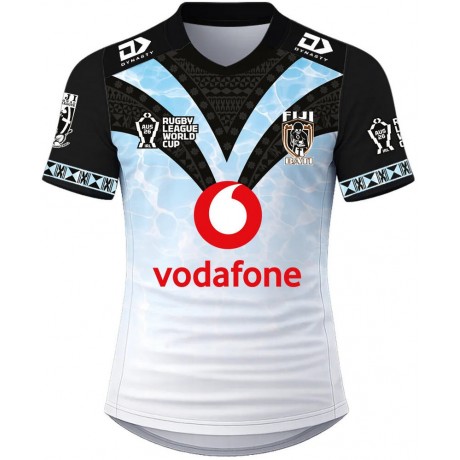
The front design combines black shoulders with pale cyan panels extending into a white lower body. The angled blue sections create a V-shaped arrangement across the chest.
The colour transition references Fiji's surrounding ocean environment and recalls light-blue treatments seen on earlier Fiji jerseys. Black sleeve sections provide contrast, while patterned cuffs connect the sleeves to the upper-body graphics.
2. Geometric Patterns and Team Markings
Repeating geometric motifs appear across the black upper section, with additional decorative elements on the sleeve cuffs. These patterns contribute to the shirt's Fiji-inspired appearance, although their precise cultural interpretation is not specified in the supplied product information.
The chest carries the Fiji Bati crest and Rugby League World Cup marking, while Vodafone branding occupies the centre. Dynasty manufacturer graphics appear near the shoulders.
Product specifications identify embroidered chest logos, sublimated graphics and embossed details. Embroidery creates a raised thread surface, sublimation allows detailed colour transitions, and embossing adds subtle texture.
3. Recycled Polyester Pique Fabric
The material is specified as 100% recycled polyester pique with a fabric weight of 226gsm. GSM means grams per square metre and measures fabric weight rather than the weight of the entire shirt.
Pique fabric generally has a textured knitted surface. Polyester is widely used in sportswear because it is relatively easy to maintain and typically dries faster than many absorbent natural fibres.
The recycled composition indicates the use of recycled raw material, although it does not independently establish the environmental impact of the complete manufacturing process.
4. Two-Way Stretch and Replica Fit
The shirt uses lightweight two-way stretch fabric, allowing movement and recovery along a principal stretch direction. This construction can improve flexibility during ordinary physical activity.
Its replica fit is intended for general supporter use rather than the close-fitting requirements often associated with professional player-issued jerseys. However, replica fit does not necessarily mean loose, so measurements should be checked separately.
5. Collar and Drop Hem Construction
The jersey uses a streamlined traditional rugby-style collar and a drop hem construction. A drop hem generally extends the lower edge to improve coverage during movement.
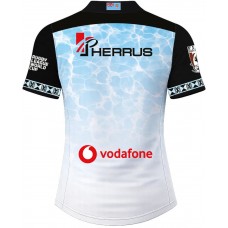
The rear view provides another perspective on the shirt's overall shape and lower hem. Together with the patterned sleeve trim, these details distinguish the design from a basic printed sports shirt.
6. Breathability and Sportswear Performance
Polyester pique and stretch construction are suitable characteristics for sportswear applications. However, material composition alone does not establish a specific level of breathability, moisture management or cooling performance.
The available specifications do not provide laboratory ventilation measurements or verified high-intensity performance results. The shirt should therefore be assessed using its documented fabric and construction rather than assumed technical capabilities.
What Activities Is This Jersey Suitable For?
Match Day
The team crest, tournament marking and home graphics make the shirt recognizable during Rugby League World Cup matches and supporter events. Its main purpose in this setting is team identification rather than professional playing protection.
Everyday Use
The replica fit, polyester fabric and stretch construction also make the shirt relevant for ordinary daily activities. Comfort will depend on the chosen size, weather conditions and individual fabric preferences.
Training and Light Exercise
The jersey can be used for walking, casual exercise and low-intensity activity. Nevertheless, it is not specifically classified as professional training apparel.
Dedicated training jerseys may provide different ventilation, durability and fit characteristics for prolonged exercise or repeated physical contact.
Who Is This Rugby Jersey Suitable For?
Fiji Bati supporters: The shirt clearly identifies the national team through its crest, tournament markings and home colours.
Rugby league beginners: It offers a practical example of the differences between home, replica and training jersey classifications.
Jersey collectors: The 2026 tournament association, Dynasty manufacturing details and distinctive graphics help identify this particular design. Tournament branding alone does not confirm limited-edition production.
Sportswear researchers: The recycled polyester composition, 226gsm pique fabric, two-way stretch and drop hem provide useful specifications for comparing rugby shirts.
Is This Type of Rugby Jersey Worth Considering?
From a rugby jersey review perspective, the main characteristics are its recognizable tournament design, documented material composition and supporter-oriented construction.
The cyan gradient and geometric patterns distinguish the shirt visually, while the embroidered markings and World Cup graphics establish its team and competition identity. Its polyester pique fabric and stretch construction provide practical features for general use.
There are also limitations. Replica construction differs from player-issued equipment, and fabric weight alone cannot confirm breathability or durability. The shirt is better understood as a tournament supporter garment than specialized high-intensity training apparel.
For readers researching a Fiji Bati shirt, the most relevant considerations are its home design, tournament association, fit classification and stated fabric specifications.
Where Can You View This Jersey?
Additional product images and specifications are available on the Fiji Bati Rugby League World Cup 2026 Home Jersey product page at RugbyJerseyStore.
The listing can be used to review the design and check available sizing information. Measurements are particularly useful when interpreting replica fit and drop hem construction.
Overall, this Fiji Bati rugby jersey combines a recognizable 2026 World Cup home design with recycled polyester pique, two-way stretch and detailed team graphics. Understanding its differences from away, training and player-issued jerseys provides a clearer picture of its intended purpose and construction.


Rugby Jerseys for Every Fan
Kids jerseys, rugby jersey gifts, and match day styles for fans worldwide. Secure checkout, fast shipping, and reliable after-sales support.


Copyright © 2026, RugbyJerseyStore, All Rights Reserved.